These days, screens take up most of our attention, providing instant responses and flashing animations with a single finger flick. Anyone who has witnessed a youngster engage with the real world will attest to the fact that the true magic occurs elsewhere. It is easy to fall into the trap of believing that digital interaction translates to learning. Children are doing more than just killing time when they are able to touch, build, test and sometimes break things. They are building a comprehension of reality.
We have spent years at BrainPlay investigating the development of young minds and our belief has only grown. Tactile exploration is essential to true cognitive growth. A child's brain creates connections that a pixelated surface just cannot match when they pick up tangible objects.
Sowing the Seeds of Critical Thinking
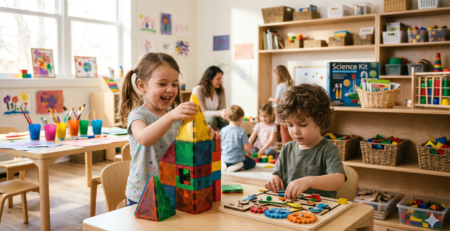
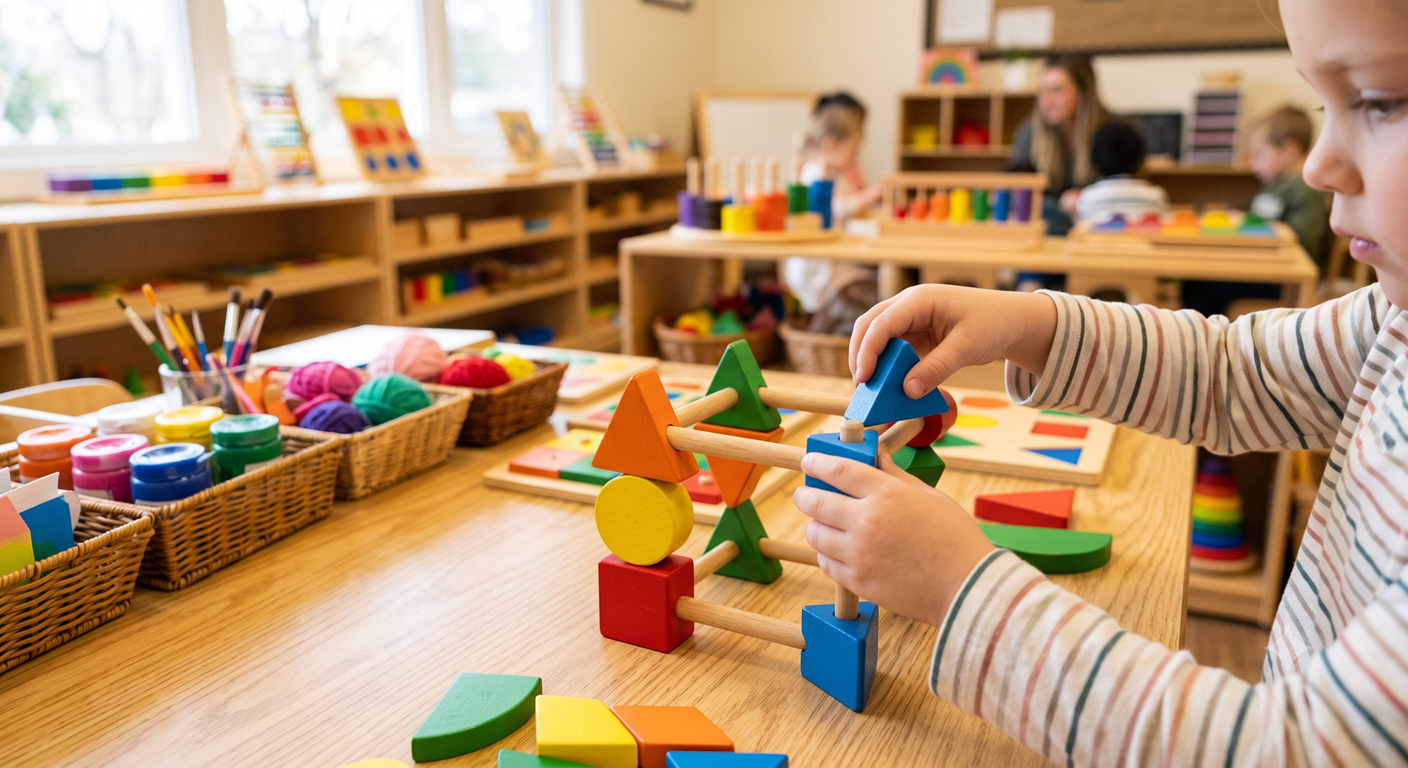
Consider a basic geometric puzzle. A toddler drags a triangle to its position on a screen. The form snaps back, or an alert goes off if they miss. In the end, it is tidy, binary and passive. Imagine that same kid with a kit of wooden blocks now. They make an effort to put the parts together. Through trial and error, they discover spatial relationships, feel the harsh angles and investigate the texture.
The foundation of early childhood development is this kind of active investigation. Young students naturally acquire problem-solving abilities by physically interacting with classroom materials. They discover that failure is an invitation to try something different rather than a computerised error notice. We purposefully choose our educational materials to support this particular type of robust, self-reliant thinking.
Cultivating Lifelong Innovators
Our enthusiasm extends much beyond conventional teaching tools. Although the workforce of today must be able to navigate abstract systems, technical proficiency still has very physical roots. For this reason, we strongly support integrating interactive STEM toys into daily life.
Children learn how components fit together to form a functional whole as they engage with early engineering principles. Sequencing, cause and effect are taught to them. By making abstract mathematical ideas concrete, this practical approach demystifies science and technology. We close the gap between abstract textbook figures and practical comprehension by providing tools like customised foundation and intermediate phase maths kits.
Supporting Every Unique Learner
Each youngster learns differently. Traditional auditory or text-based instructions can be intimidating for many young learners, particularly those with learning difficulties like autism. Learning experiences that are tactile and sensory-rich provide an approachable route to understanding. Educational games and tangible resources provide children with a solid foundation by appealing to their senses.
They can hear the gratifying click of a construction set, feel the weight of the counting block and see the pattern. Learning becomes an intriguing discovery rather than a strict task thanks to this multisensory feedback. Our goal is to help parents, educators and therapists throughout Southern Africa by offering the top-notch educational resources and tools required to give every kid the best start in life. We think that by fostering a child's innate curiosity via play, you may cultivate a lifelong love of learning. Let's offer our kids something tangible to cling to and move away from the digital clutter.