As we see the rapid growth of technology around the world today, we cannot help but notice a growing concern among parents and educators about how much screen time children are exposed to on a daily basis. In an age where digital gadgets are ever-present and artificial intelligence shapes much of our interaction, striking a good balance between technical literacy and fundamental mental growth is becoming an increasingly serious problem. We are witnessing a major global movement in which homes and schools are intentionally returning to hands-on, tactile learning experiences to encourage creativity, resilience and critical thinking in early childhood.
While screens have definite educational benefits, we feel they cannot replace the subtle sensory input and fine motor skill development given by physical, real-world play. When a youngster manipulates real items, various parts of their growing brain are actively engaged at the same time, forming strong neural connections that set the groundwork for lifetime learning and adaptability. This is precisely why investing in high-quality educational resources is no longer just a good idea but an imperative requirement for nurturing our young students.
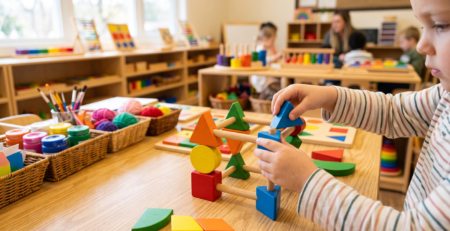
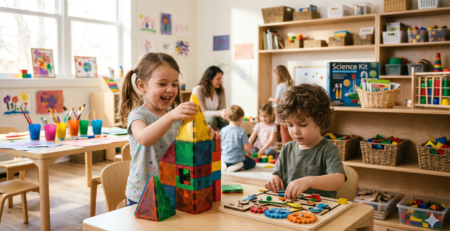
As we go through this difficult digital transformation, we continue to discover that putting dependable ECD products into everyday routines is the ideal remedy to digital burnout and overload. By providing children with continuous access to organised yet open-ended materials, we actively encourage them to investigate spatial relationships, practise independent problem-solving and develop important fine motor skills at their own natural, unforced pace. For example, deeply engaging in arts and crafts does far more than simply keep a youngster entertained on a rainy afternoon; it truly allows them to express complicated emotions, perfect hand-eye coordination and gain enormous confidence in their own unique creative vision.
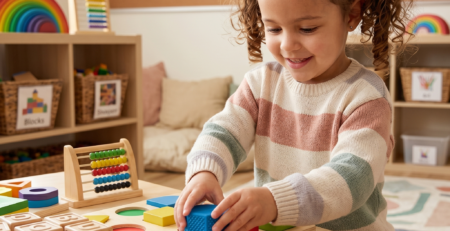
Similarly, when youngsters engage in well created puzzle learning games, they are discreetly but forcefully learning patience, strategic thinking and the enormous value of perseverance when confronted with a difficult task. We have seen firsthand how these seemingly easy, screen-free activities can radically shift a child's emphasis away from passive content consumption and toward active, joyful creativity. Furthermore, it is critical to reinforce key academic foundations through physical, hands-on interaction. Incorporating dedicated numeracy tools makes abstract mathematical concepts instantly accessible, allowing young minds to understand numbers, operations and geometric patterns in a solid way that staring at a two-dimensional screen rarely can.
The tactile quality of physically moving blocks, sorting shapes, or counting beads elevates a theoretical lesson to an immersive, engaging experience that resonates strongly with young students. The same idea applies to language learning and literacy: using specialised tools for early reading and speech development actively encourages children to vocalise, interact with their peers and expand their vocabulary through social play rather than lonely viewing. These physical tools develop crucial interpersonal skills such as sharing, bargaining, teamwork and empathy, whether through imaginative role-playing situations, cooperative storytelling, or collaborative engineering projects employing sturdy construction toys.
The modern world is rapidly moving toward a more virtual future, but our children's core developmental needs remain firmly and unquestionably rooted in the real, tactile world around them. We are convinced that the most effective method to appropriately educate our children for tomorrow's difficult issues is to immerse them in hands-on, play-based learning today. By putting these enriching experiences first, we are not rejecting modern technology; rather, we are ensuring that our children acquire a well-rounded foundation that will allow them to live intelligently alongside it. Equipping our environments with the appropriate tools makes a huge difference in developing skilled brains.